
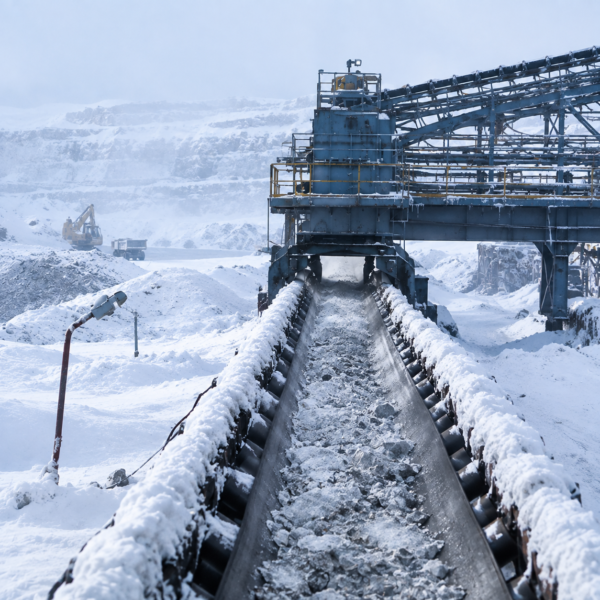
Key Features
- Excellent flexibility at low temperatures
- High resistance to wear and abrasion
- Good impact resistance for heavy material handling
- Strong elasticity and mechanical durability
- Designed to resist cracking and hardening in cold conditions
- Reliable performance in outdoor winter environments
- Suitable for continuous industrial conveying operations
- Available in different constructions according to application requirements
Temperature Resistance
Cold-resistant belt compounds can be selected according to the operating environment. Asmatek Industries can provide belt constructions suitable for temperatures down to approximately -40°C, depending on the specific compound, operating conditions, and application.
Applications
Cold-resistant conveyor belts are suitable for industries and locations such as:
- Mining and quarrying
- Cold storage facilities
- Frozen material handling
- Cement and aggregate plants
- Power plants
- Ports and bulk-material terminals
- Outdoor conveyors operating in winter climates
- Material handling in cold-region industries
Why Choose a Cold Resistant Conveyor Belt?
At low temperatures, conventional rubber can lose flexibility and become more vulnerable to cracking and mechanical damage. A properly formulated cold-resistant belt helps maintain the flexibility, strength, and durability required for dependable material transportation.
The appropriate rubber compound, belt carcass, thickness, tensile strength, and cover grade should be selected according to the conveyed material, temperature range, belt speed, impact conditions, and conveyor design.