
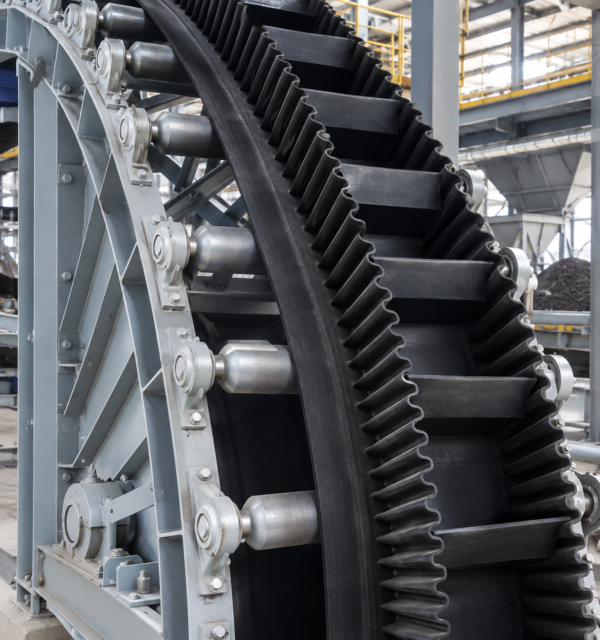
Key Features
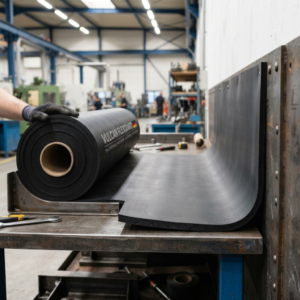
- Corrugated sidewalls for effective material containment
- Transverse cleats for improved load carrying
- Suitable for steep-angle and vertical conveying
- High flexibility around conveyor curves
- Good resistance to abrasion and mechanical wear
- Available in flame-retardant and heat-resistant constructions
- Options for oil, fat and abrasion resistance
- Designed for high-capacity bulk material handling
- Can be configured for space-constrained installations
- Reduced material spillage compared with conventional open conveying arrangements
Product Specifications
Depending on the application and belt construction, available options can include:
- Heat resistance: up to approximately 100°C for selected grades
- High-temperature grades: up to approximately 150°C
- Flame-retardant construction
- Oil and fat-resistant cover compounds
- High-abrasion-resistant rubber compounds
- Belt widths available according to conveyor design, including large-width configurations
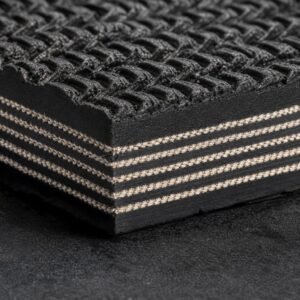
- Different cleat heights, sidewall profiles and belt constructions for specific conveying requirements
Actual temperature limits, belt width, tensile strength and compound selection should be confirmed according to the required operating conditions.
Applications
Sidewall belting is particularly useful where conventional horizontal conveyors cannot provide the required elevation or where floor space is limited.
Typical applications include:
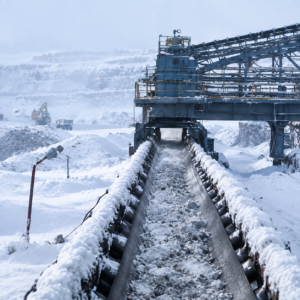
- Mining and quarrying
- Cement plants
- Coal and power plants
- Steel and metallurgical industries
- Aggregates and stone handling
- Ports and bulk-material terminals
- Fertilizer and chemical industries
- Recycling and waste-processing plants
- Bulk material transfer and elevation systems
Advantages of Sidewall Conveyor Systems
Steep-angle conveying:
Materials can be transported at substantially steeper inclines than conventional flat conveyor systems, with the sidewalls and cleats helping retain the load.
Reduced spillage:
The integrated sidewalls create a contained carrying area, helping minimize material loss during inclined conveying.
Space efficiency:
Steep conveying can significantly reduce the horizontal footprint required to achieve a particular elevation, making sidewall systems useful where installation space is restricted.
Versatile material handling:
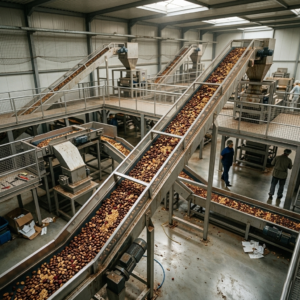
Depending on the belt design, the system can handle abrasive, heavy, lightweight, granular, lumpy and other bulk materials.
Efficient conveying:
A properly designed sidewall conveyor can provide an efficient method of lifting material while reducing the number of separate transfer stages required.